What to make of Hisense? The Chinese manufacturer has long had a reputation for affordable TVs, speakers, and assorted home appliances – though its growth in the television space has shown there’s far more to the brand than simply budget tech.
With ultra-thin models, forays into 8K and projector-television hybrids (you heard me), Hisense is proving a force of innovation in a rapidly evolving market, one where manufacturers are having to compete with new form factors like Samsung’s modular screens or LG’s rollable OLEDs.
Add that to a host of superbly cheap televisions – like the well-reviewed Hisense A6200 – and you have a TV-maker competing on all fronts, with real value on premium picture technologies like UHD resolution and high dynamic range (HDR), even if you’re not necessarily seeing these features at their best.
To keep you up to date with Hisense’s latest sets, we’ve put together this guide to every 2019 Hisense TV coming this year. But if none of them catch your eye, don’t worry: we’ll be sure to update this list as more sets get announced in the coming months.
Since 2015 Hisense has licensed the Sharp brand for shipping TVs in the US too, and even acquired Toshiba’s TV range shortly after, though we’ll be focusing here on televisions flying the ‘Hisense’ flag.
Hisense 2019 TV technology
So what can you expect from Hisense?
For all the bells and whistles listed here, Hisense is a budget brand. You may not be getting the same guarantee of hardware quality or snazzy design as with the likes of Panasonic or LG, but the features you do get are usually a decent cut below the competition.
Hisense’s main buzzword is ULED, or ‘ultra LED’. ULED TVs still have LCD-LED panels, but use a metallic quantum dot filter – like the kind found in Samsung’s QLED TVs – to enhance contrast and definition. Hisense also ensures its ULED sets throw in improved motion rates and local dimming (for precise brightness control), so you’re getting an all-round upgrade compared to the rest of its TV range.
As of 2019, Hisense is also investing in OLED, the premium panel technology of the moment – though so far exclusively in Australia – and it's clear we're seeing a manufacturer keen to cover all bases.
There was chatter at this year’s CES 2019 expo about Hisense's new ULED XD display tech, which goes one better with a dual-layer panel (essentially a 4K color screen with an HD grayscale screen tucked behind it) to enhance local dimming and dynamic range – though we're yet to see any models announced with the new tech.
Hisense has also been carving out a laser TV range, which uses a triple-ray projector to get dazzling colors onto a TV screen, making use of the entire DCI-P3 color space. Do you need a TV and projector, rather than just the one? Maybe not. But for those who can afford it, the laser TV range offers something different.
In terms of smart platforms, Hisense uses a variety of UI – including the brilliant Roku TV – though it favors its own VIDAA platform for ULED-branded sets. Every ULED TV this year will feature version 3.0 of ViDAA, with full Alexa integration for voice commands, compatibility with Google Assistant devices, and automatic detection of other home devices like gaming console or Blu-ray players connected through HDMI. Hisense also promises "boot time[s] nearly two times faster than Hisense 2018 models."
Hisense Sonic One (2019)
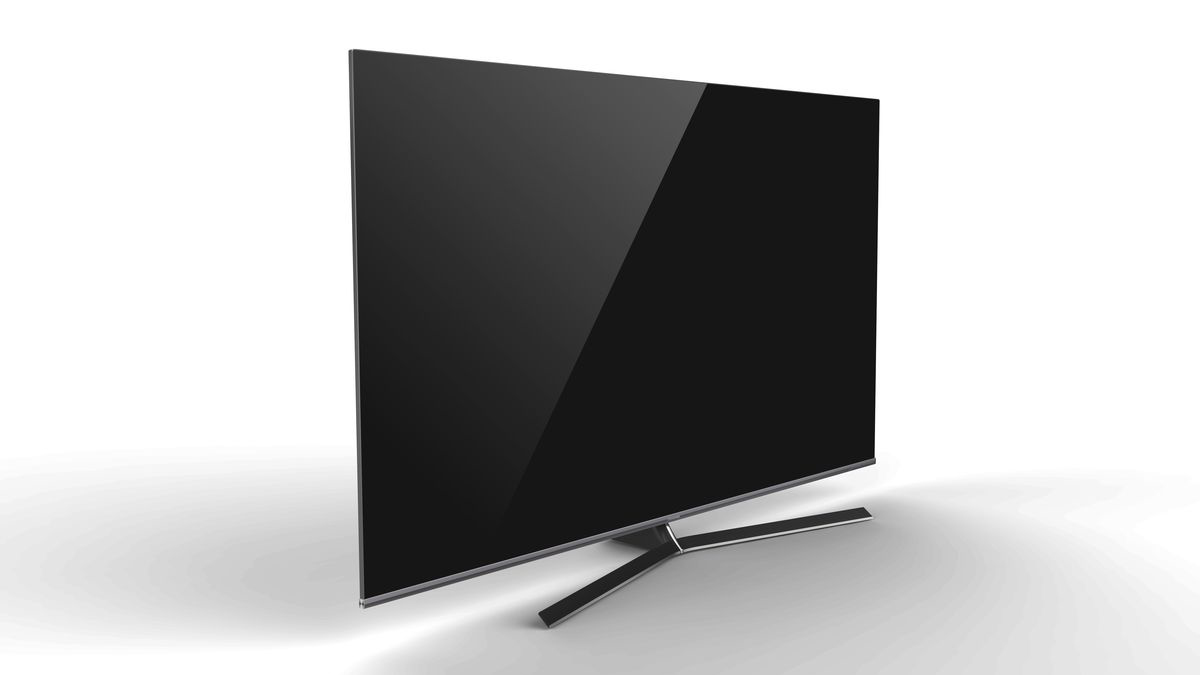
Sometimes less is more. Hisense's Sonic One television is an astonishing 1.1mm thin at its thickest point, without having to outsource its processing or speakers to an external system. That's thanks to a Piezoelectric speaker design that 'pumps sound from the panel' itself instead of through a traditional cone driver. No sizing or pricing yet announced, but expect it to cost a pretty penny.
Hisense TriChroma Laser TV
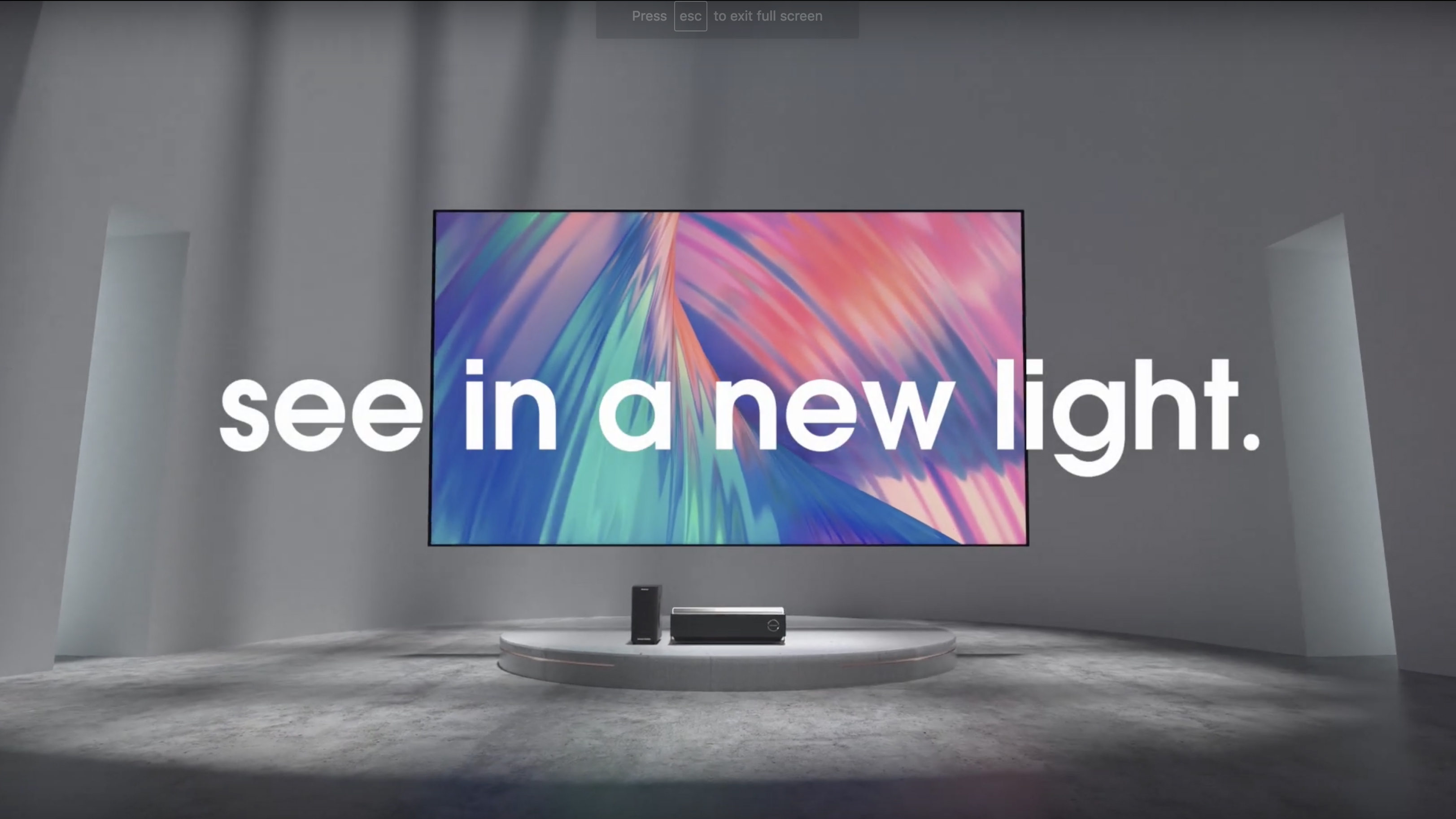
Is it a TV, a projector, or a hybrid of the two? Hisense’s TriChroma TV essentially projects with three colored lasers onto a blank TV screen, and covers the entire DCI-P3 color gamut. Expect a five-figure sum, but a rich picture to match its price tag.
Hisense 2019 ULED TVs
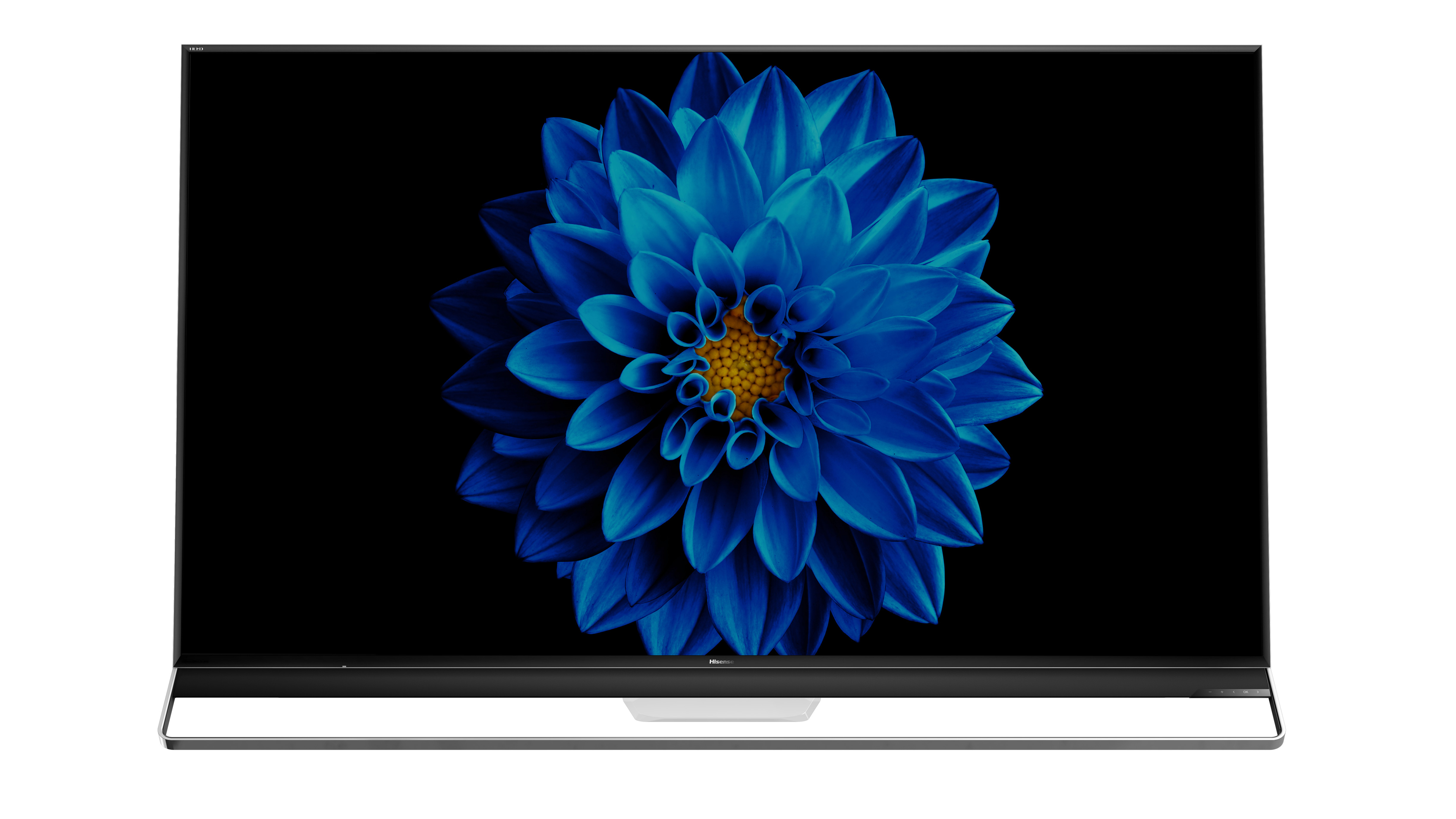
Hisense U9F Quantum Dot (2019): The Hisense 75U9F is a 75-inch Quantum Dot screen with Android TV, and over a thousand local dimming zones for keeping its 2,200 nits peak brightness in check. Specs-wise, that puts the U9F on par with Samsung's Q9FN QLED, which debuted in 2018 and became one of the best TVs of last year.
The U9F launches in June, at a steep $3,499 (around £2,740, AU$4,999). Comes with Dolby Vision and built-in Google Assistant.
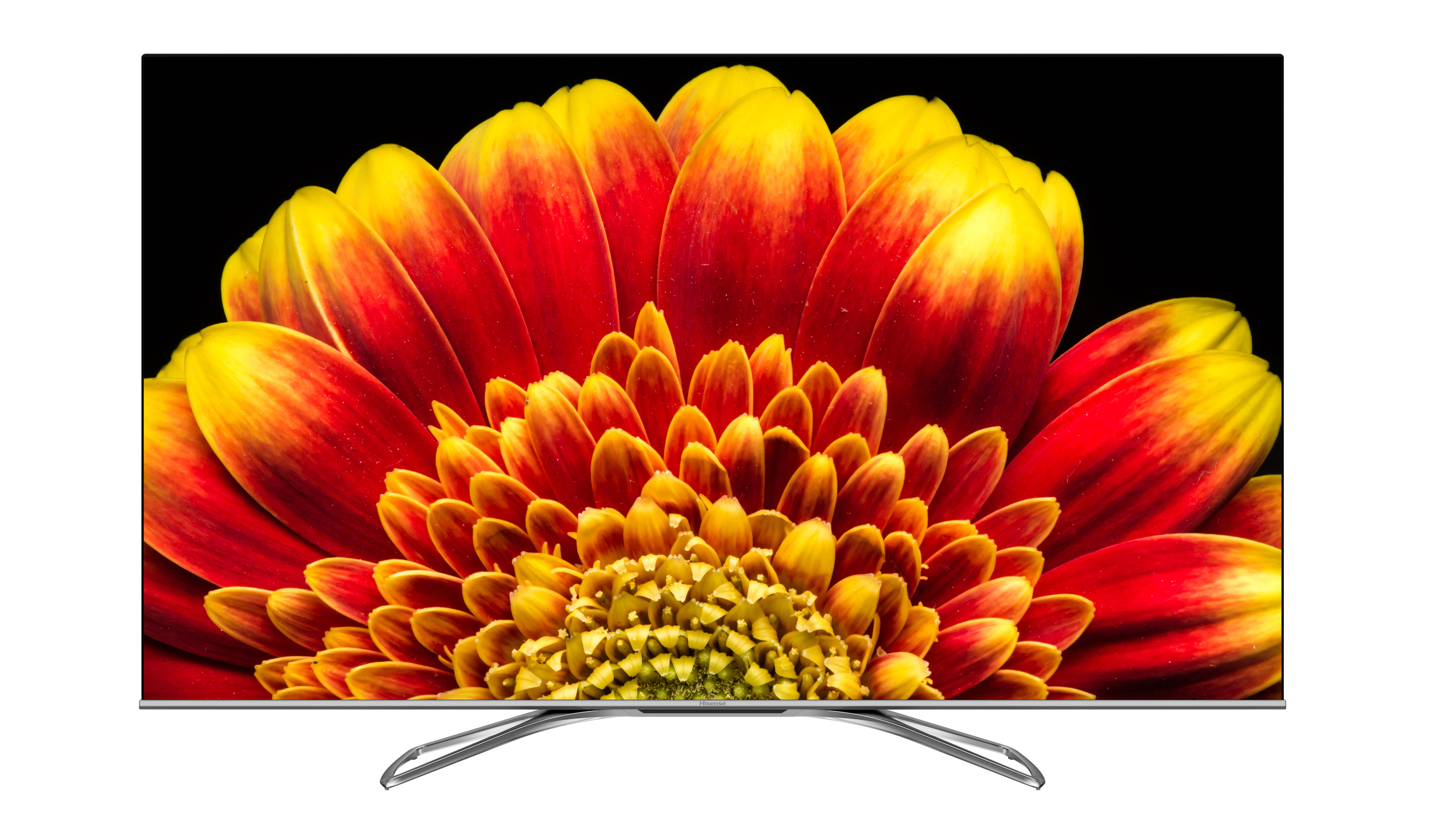
Hisense H9F (available in 55 and 65-inch models): A more reasonably-priced version of the above, though only with 150 dimming zones and 1,000 nits peak brightness. The H9F is a 4K UHD set costing $699 (around £525 / AU$979) and $749 (around £656 / AU$1,049) respectively for the 55 and 65-inch models. Comes with Dolby Vision and launches this coming May.

Roku TV R8 (available in 55 and 65-inch models): Could Hisense beat the TCL 6 Series Roku TV? Roku is a superb smart TV platform, and the Roku TV R8 from Hisense is the first time it’s been coupled with Hisense’s ULED panel technology. Available in late 2019, costing $600 (around £526 / AU$840) or $750 (around £656 / AU$1,049) for the 55 and 65-inch models. See out our Hisense Roku R7 review to see the previous model.
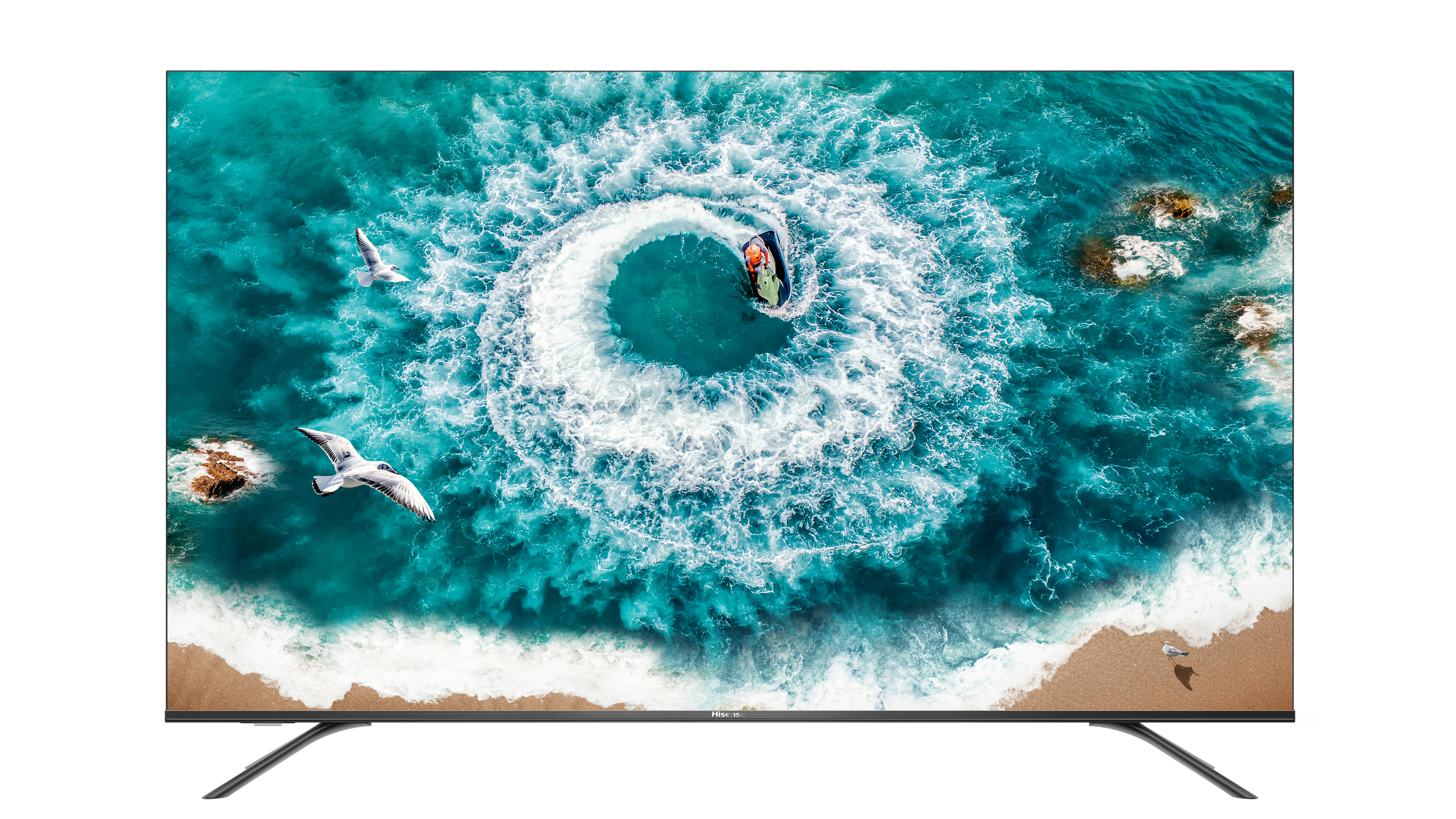
Hisense H8F (available in 50, 65-inch models): Same panel technology as above, but with a more standard Android TV platform instead. You do however get Alexa compatibility and Google Assistant integration from the off. Launching in May in 50 inches for $400 (around £350 / AU$560), and 65 inches for $750 (around £656 / AU$1,049) .
Hisense 2019 UHD / HD TVs
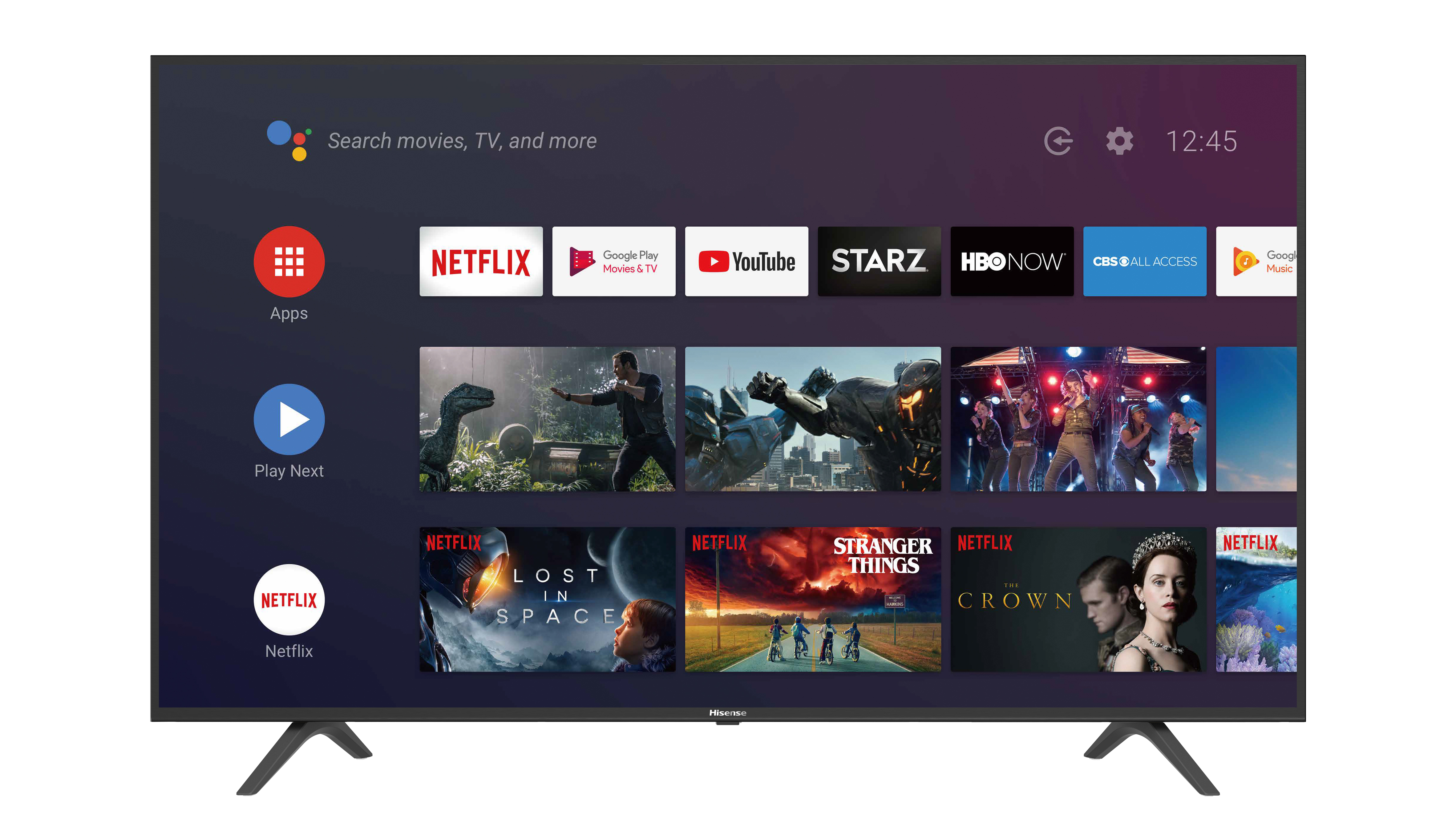
Hisense H65 UHD TV (available in 50, 75 inches): A step down from ULED, without the quantum dot panel, wide color gamut, or local dimming. You do, however, get basic HDR support (HDR10), and a 50-inch 4K UHD display for only $349 (around £307 / AU$490), or a 75-inch display for $1,199 (around £1,053 / AU$1,683). Launching in late 2019.
Hisense H5 HD TV (available in 32, 40 inches): For those wanting something on the small side, the ultra-cheap H5 launches this coming May in 32 or 40-inch models, at $169 (around £148 / AU$237) and $249 (around £219 / AU$349) respectively. You're only getting 1080p Full HD, but you won't be spending much on it either.
Everything you need to know about the new TV launches of 2019:
The Philips TV range 2019: everything you need to know from OLED+ to ‘The One’
Sony TV lineup 2019: every Sony Bravia and Master Series set coming this year
LG TV catalog 2019: here’s every LG TV model coming this year
Samsung TV catalog 2019: here’s every new Samsung TV coming in 2019
Panansonic TV lineup 2019: all the OLED and LCD televisions coming this year
from TechRadar - All the latest technology news https://ift.tt/2Tk0B3q
Comments
Post a Comment