Unlike its fellow robot vacuum rivals – the iRobots and Ecovacs of the world – Shark’s parent company Euro-Pro has an established pedigree in making market-leading household appliances, and its Shark brand is a well-known, well-respected name in vacuuming. It is often mentioned in the same breath as Dyson in many a best vacuum cleaner list and is renowned particularly for its effectiveness at tackling pet hair.
For this guide, we’re looking specifically at its Shark Ion 750 Wi-Fi model. We’d expect to see the Shark Ion 750, as well as other Shark robot vacuums, on sale during Black Friday and Cyber Monday 2019. For more options, read more in our best robot vacuums page.
The Bottom Line: As a member of the Shark range, the Ion 750 takes the vacuuming smarts of the brand’s upright and cordless products and shrinks it down into a circular, motorised cleaner. It’s a Wi-Fi-enabled robot vacuum that’s controlled via an app and has support for Amazon Alexa and Google Assistant.
Pros: Shark makes hugely popular, highly rated vacuums and its reputation and experience here is a major pro. The Ion 750 combines features of more expensive robot vacuums, such as smart assistant support, but does so at a more affordable price.
Cons: You don’t get the advanced navigation skills seen on more expensive models and its runtime is up to 60 minutes – 30 minutes less than iRobot’s Roomba range.
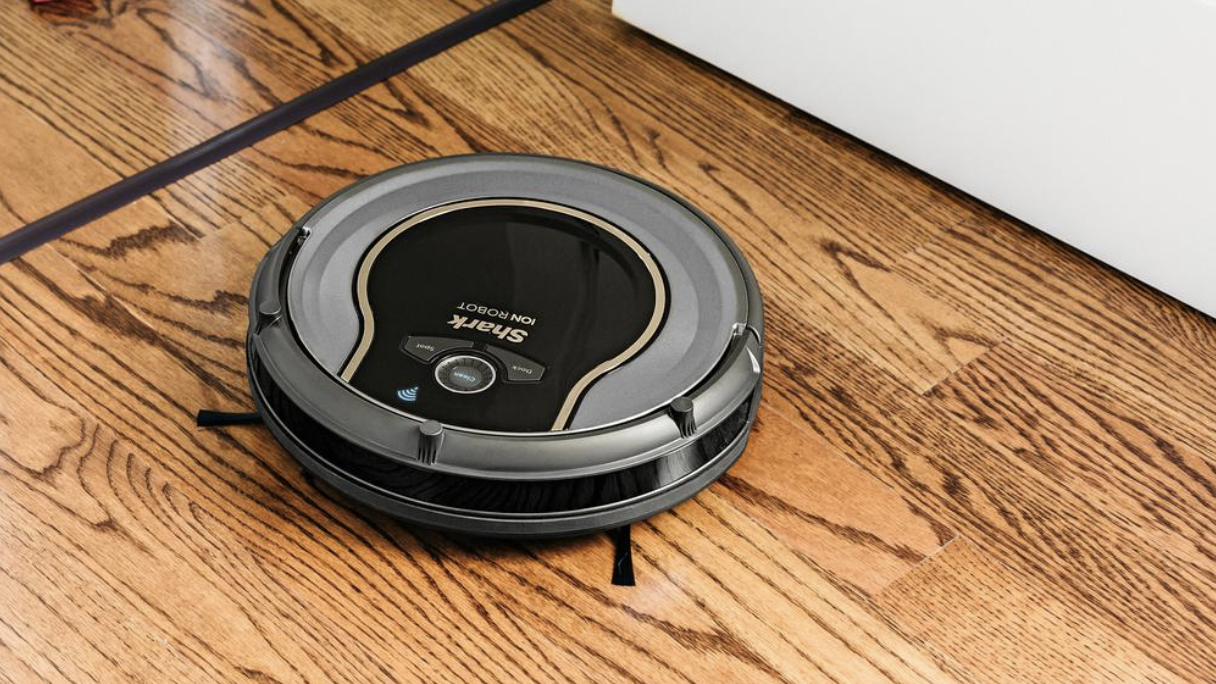
Shark Ion 750 Wi-Fi robot vacuum: everything you need to know
Compared to iRobot in particular, Shark’s robot vacuum range is somewhat limited. The brand offers five main versions under the Ion brand, plus a premium IQ vacuum range, but their names and availability vary by region.
Shark’s Ion 750/R75 sits in the R700 Series towards the lower-end of the range, alongside the Ion 761/R76 and Ion 780/R78, and behind the 800 Series models, the Ion 850/R85 and the Ion 851/Ion S87.
Design: All five robot vacuums are similar in size but the vacuums in the Ion 700 Series are marginally smaller, and the Ion 750 comes in at an inch thinner than them all. This means it can fit into smaller gaps, beneath beds and sofas for instance, but the extra size seen on its siblings is due to the fact that these more advanced models pack in more sensors and navigation tech.
Features: Shark’s Ion 750 has a self-cleaning brushroll and dual side brushes for corners and edges that switch between carpets and hard floors automatically. Instead of intelligently mapping your home, the Ion 750 uses Shark’s more basic Smart Sensor navigation that uses proximity sensors to avoid obstacles. Elsewhere, the Shark Ion 750 has a so-called self-grooming system that enables the brushroll to manage and untangle long hair, string, and fibre, so you don't have to. This is ideal for homes with pets, or people with long hair.
Connections: The Ion 750 connects to Wi-Fi, which means it can be controlled by the Shark Clean app, as well as via voice controls when paired with a device running Amazon Alexa and Google Assistant.
Battery life: Shark claims the Ion 750 will run for up to 60 minutes, but this is dependent on the types of floors it’s cleaning, how dirty they are, and the number of obstacles.
Shark Ion 750 Wi-Fi robot vacuum: the final word
Shark’s robot cleaners don’t offer much more in terms of features beyond their rivals, nor do their prices vary all that wildly. They look remarkably similar, the respective apps offer similar options and, in fact, Shark’s battery tech is inferior in some cases. What you do get with Shark is a vacuuming legacy in which the brand has proven time and time again it offers a great level of performance.
TechRadar is scouring every retailer and rounding up all the top deals over the Black Friday period, and we’ve put all the best Black Friday deals and Cyber Monday deals in easy-to-navigate articles to help you find the bargains you’re looking for.
from TechRadar - All the latest technology news https://ift.tt/2OsCagW
Comments
Post a Comment