Apple has packed an interesting new accessibility feature into the latest beta of iOS: a system that detects the presence of and distance to people in the view of the iPhone’s camera, so blind users can social distance effectively, among many other things.
The feature emerged from Apple’s ARKit, for which the company developed “people occlusion,” which detects people’s shapes and lets virtual items pass in front of and behind them. The accessibility team realized that this, combined with the accurate distance measurements provided by the lidar units on the iPhone 12 Pro and Pro Max, could be an extremely useful tool for anyone with a visual impairment.
Of course during the pandemic one immediately thinks of the idea of keeping six feet away from other people. But knowing where others are and how far away is a basic visual task that we use all the time to plan where we walk, which line we get in at the store, whether to cross the street, and so on.
The new feature, which will be part of the Magnifier app, uses the lidar and wide-angle camera of the Pro and Pro Max, giving feedback to the user in a variety of ways.
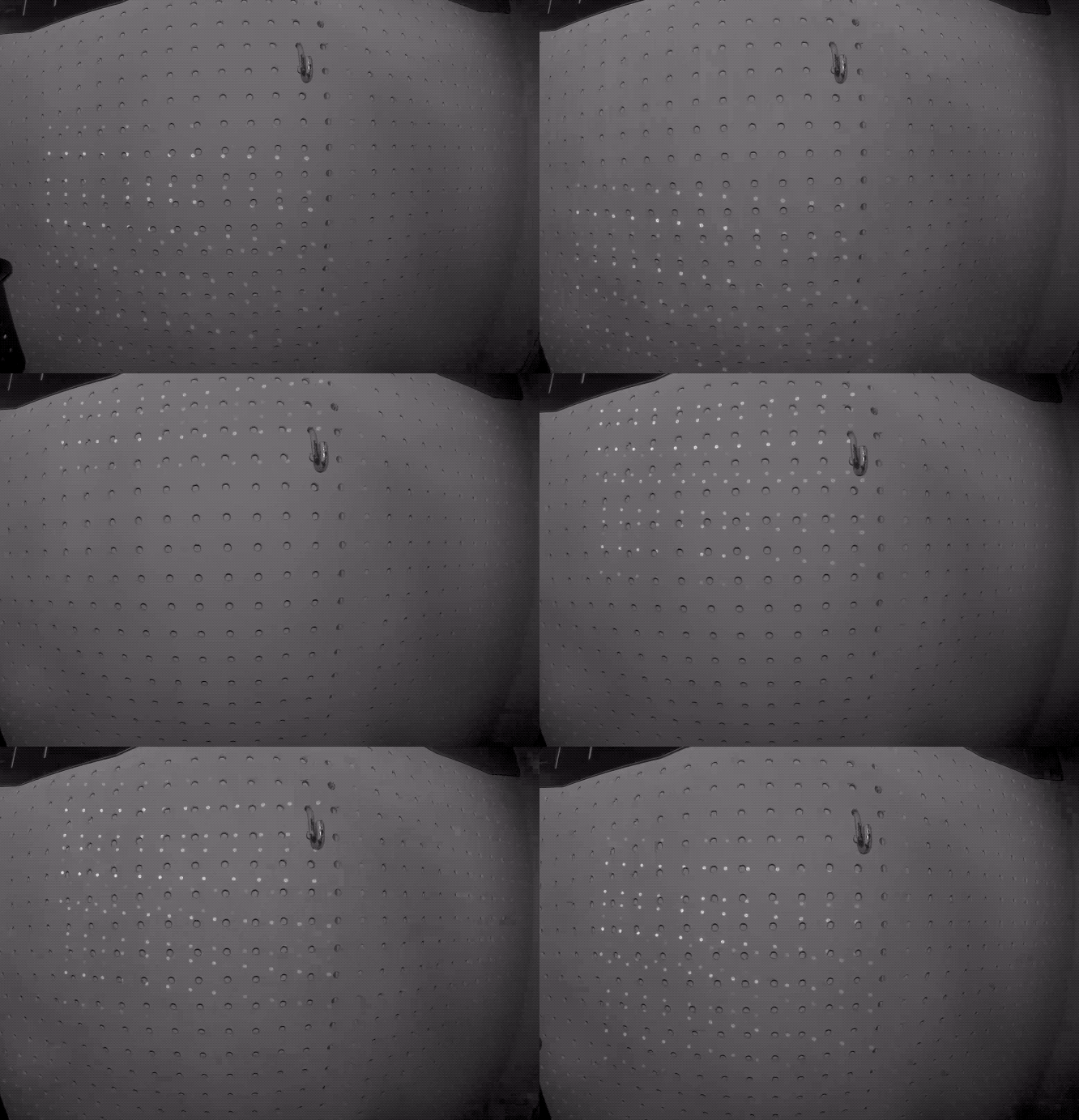
The lidar in the iPhone 12 Pro shows up in this infrared video. Each dot reports back the precise distance of what it reflects off of.
First, it tells the user whether there are people in view at all. If someone is there, it will then say how far away the closest person is in feet or meters, updating regularly as they approach or move further away. The sound corresponds in stereo to the direction the person is in the camera’s view.
Second, it allows the user to set tones corresponding to certain distances. For example, if they set the distance at six feet, they’ll hear one tone if a person is more than six feet away, another if they’re inside that range. After all, not everyone wants a constant feed of exact distances if all they care about is staying two paces away.
The third feature, perhaps extra useful for folks who have both visual and hearing impairments, is a haptic pulse that goes faster as a person gets closer.
Last is a visual feature for people who need a little help discerning the world around them, an arrow that points to the detected person on the screen. Blindness is a spectrum, after all, and any number of vision problems could make a person want a bit of help in that regard.
The system requires a decent image on the wide-angle camera, so it won’t work in pitch darkness. And while the restriction of the feature to the high end of the iPhone line reduces the reach somewhat, the constantly increasing utility of such a device as a sort of vision prosthetic likely makes the investment in the hardware more palatable to people who need it.
This is far from the first tool like this — many phones and dedicated devices have features for finding objects and people, but it’s not often that it comes baked in as a standard feature.
People detection should be available to iPhone 12 Pro and Pro Max running the iOS 14.2 release candidate that was just made available today. Details will presumably appear soon on Apple’s dedicated iPhone accessibility site.


from Mobile – TechCrunch https://ift.tt/37W232B
Comments
Post a Comment