
R&D Roundup: Sweat power, Earth imaging, testing ‘ghostdrivers’

I see far more research articles than I could possibly write up. This column collects the most interesting of those papers and advances, along with notes on why they may prove important in the world of tech and startups.

This week: one step closer to self-powered on-skin electronics; people dressed as car seats; how to make a search engine for 3D data; and a trio of Earth imaging projects that take on three different types of disasters.

Sweat as biofuel

Monitoring vital signs is a crucial part of healthcare and is a big business across fitness, remote medicine and other industries. Unfortunately, powering devices that are low-profile and last a long time requires a bulky battery or frequent charging is a fundamental challenge. Wearables powered by body movement or other bio-derived sources are an area of much research, and this sweat-powered wireless patch is a major advance.
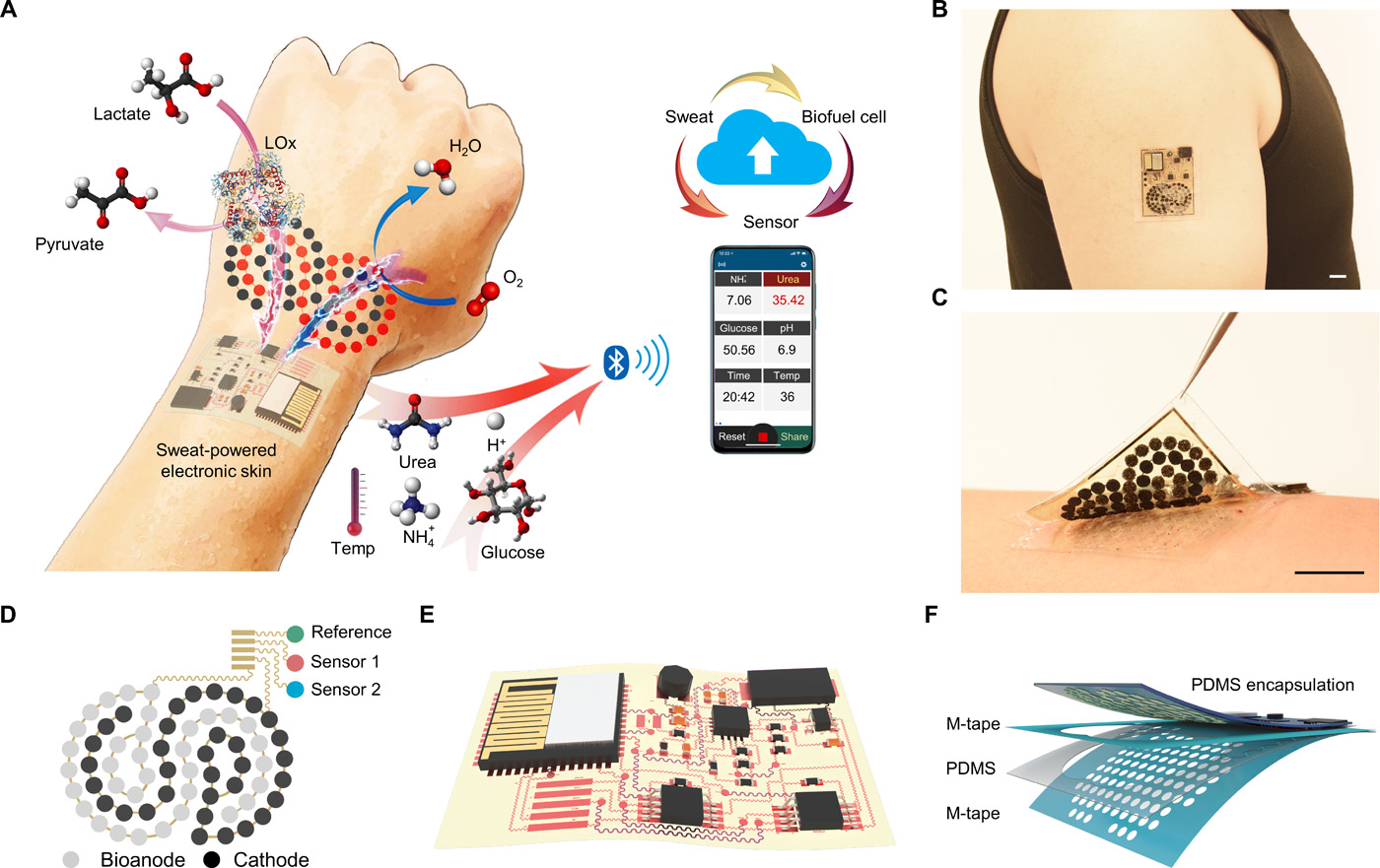
A figure from the paper showing the device and interactions happening inside it.

The device, described in Science Robotics, uses perspiration as both fuel and sampling material; sweat contains chemical signals that can indicate stress, medication uptake, and so on, as well as lactic acid, which can be used in power-generating reactions.

The patch performs this work on a flexible substrate and uses the generated power to transmit its data wirelessly. It’s reliable enough that it was used to control a prosthesis, albeit in limited fashion. The market for devices like this will be enormous and this platform demonstrates a new and interesting direction for researchers to take.


from Gadgets – TechCrunch https://ift.tt/2KIaMJe

Comments

Popular posts from this blog

The future of Magic Leap's promising AR efforts dim after layoffs

The Magic Leap Two is now further away than ever, unfortunately. Today in a blog post the augmented reality pioneer announced major layoffs and has decided to cut up to half of its workforce, according to some reports. The original Magic Leap One was supposed to be one of the first mainstream augmented reality headsets when it launched in 2018, but a high price point and lack of interest from developers left the headset high and dry after launch. According to the blog post, Magic Leap says it will be focusing its efforts on enterprise solutions (a statement HTC has made recently as well) and shift its focus away from consumer technology… at least for the time being.  The company has been open about creating a second headset that would offer improved specs for some time, but how that work will now have to go forward without half of the team , according to some estimates, remains to be seen. Is the window closing on augmented reality?  Although it’s just one company, Magic...

Airship acquires SMS commerce company ReplyBuy

Airship is announcing that it has acquired mobile commerce startup ReplyBuy . The startup (which was a finalist at TechCrunch’s 1st and Future competition in 2016) works with customers like entertainment venues and professional and college sports teams to send messages and sell tickets to fans via SMS. It raised $4 million in funding from Sand Hill Angels, Kosinski Ventures, SEAG Ventures, Enspire Capital, MRTNZ Ventures and others, according to Crunchbase . Airship, meanwhile, has been expanding its platform beyond push notifications to cover customer communication across SMS, email, mobile wallets and more. But CEO Brett Caine said this is the first time the company is moving into commerce. While sports and concerts tickets might not be a booming market right now, Caine suggested that the company is actually seeing increased purchasing activity “in and around the Airship platform” as businesses try to drive more in-app purchases. He also suggested that both the COVID-19 pandem...