Vaping is a controversial habit: it certainly has its downsides, but anecdotally it’s a fantastic smoking cessation aid. The thing is, until behavioral scientists know a bit more about who does it, when, how much and other details, its use will continue to be something of a mystery. That’s where the PuffPacket comes in.
Designed by Cornell engineers, the PuffPacket is a small device that attaches to e-cigarettes (or vape pens, or whatever you call yours) and precisely measures their use, sharing that information with a smartphone app for the user, and potentially researchers, to review later.
Some vaping devices are already set up with something like this, to tell a user when the cartridge is running low or a certain limit has been reached. But generally when vaping habits are studied, they rely on self-report data, not proprietary apps.
“The lack of continuous and objective understanding of vaping behaviors led us to develop PuffPacket to enable proper measurement, monitoring, tracking and recording of e-cigarette use, as opposed to inferring it from location and activity data, or self-reports,” said PhD student Alexander Adams, who led the creation of the device, in a Cornell news release.
The device fits a number of e-cigarette types, fitting between the mouthpiece and the heating element. It sits idle until the user breathes in, which activates the e-cigarette’s circuits, and the PuffPacket’s as well. By paying attention to the voltage, it can tell how much liquid is being vaporized, as well as simpler measurements like the duration and timing of the inhalation.
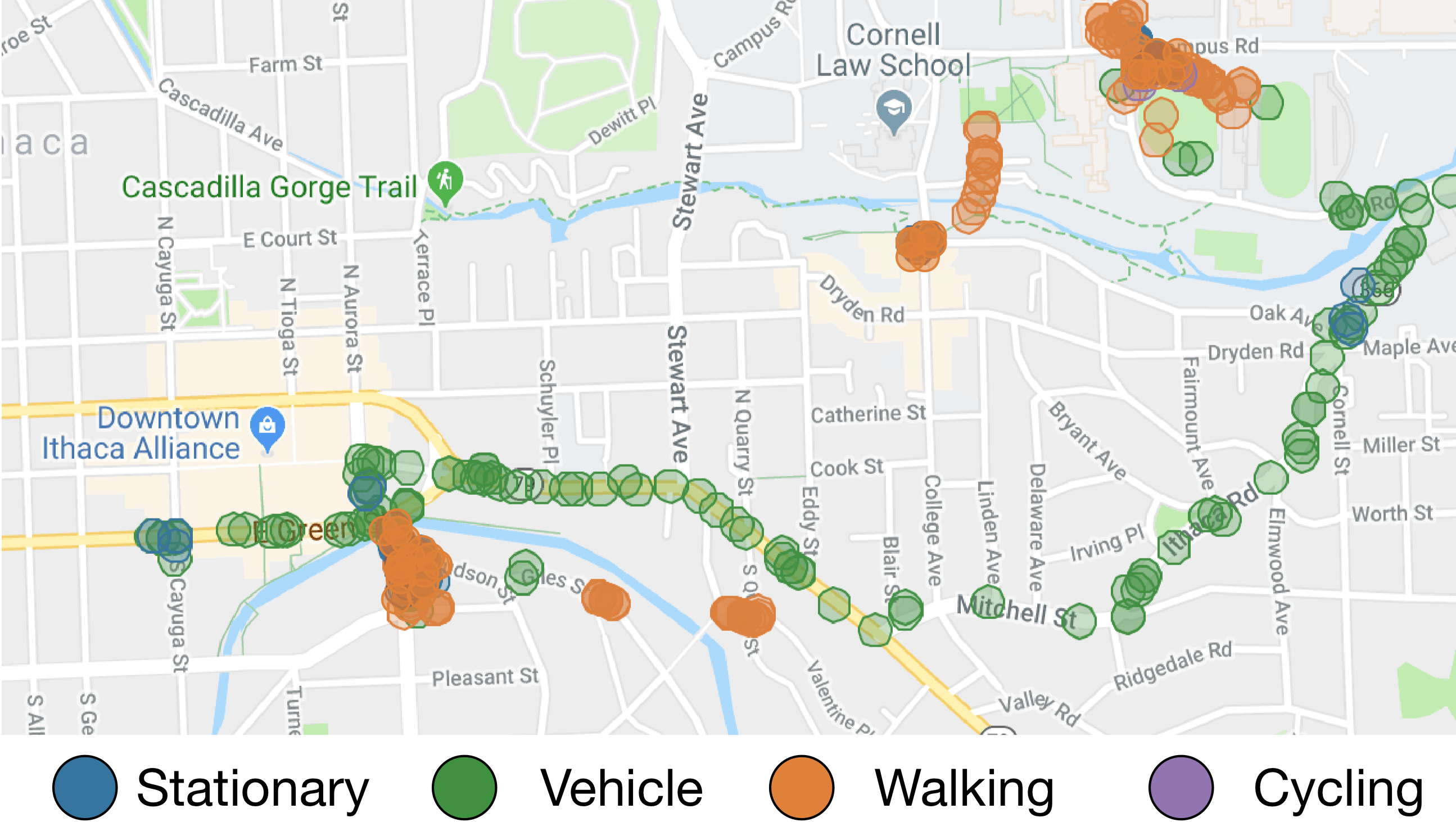
An example using real data of how location and activity could be correlated with vaping
This data is sent to the smartphone app via Bluetooth, where it is cross-referenced with other information, like location, motion and other metadata. This may lead to identifiable patterns, like that someone vapes frequently when they walk in the morning but not the afternoon, or after coffee but not meals, or far more at the bar than at home — that sort of thing. Perhaps even (with the proper permissions) it could track use of certain apps — Instagram and vape? Post-game puff?
Some of these might be obvious, others not so much — but either way, it helps to have them backed up by real data rather than asking a person to estimate their own usage. They may not know, understand or wish to admit their own habits.
“Getting these correlations between time of day, place and activity is important for understanding addiction. Research has shown that if you can keep people away from the paths of their normal habits, it can disrupt them,” said Adams.
No one is expecting people to voluntarily stick these things on their vape pens and share their info, but the design — which is being released as open source — could be used by researchers performing more formal studies. You can read the paper describing PuffPacket here.


from Gadgets – TechCrunch https://ift.tt/3d1Zyep
Comments
Post a Comment